So, what is Lyme disease and why is it such a problem?

Lyme disease (LD) is an infection caused by the bacterial spirochete, Borrelia Burgdorferi. It was named for the infamous scientist that initially discovered it, William Burgdorferi.
One of the most important things to know about Lyme disease is that it’s common to have Lyme Disease and not know it. Another important thing to know is that it usually bring friends along, and you aren’t just dealing with Lyme disease, but also the possibility of Bartonella, Babesia, Rocky Mountain Spotted Fever, Ehrlichia, and other possible co-infections. These infections look like lots of other things, and testing is often inaccurate.
Most people think Lyme disease is easily diagnosed and treated when someone has a bullseye rash (Erythema Migrans) after a tick bite. This couldn’t be further from the truth, most people don’t remember a tick bite, and never see a rash. This allows the disease to go undetected and starts to cause problems in the multiple areas of the body.
Let’s dispel some myths before we get too far…
- The tick does not have to be attached to transmit Lyme Disease. So many people and medical providers think that a tick needs to be attached for a length of time to transmit disease. I’ve witness differently in my practice.
- Most traditional labs will falsely report negative Lyme Disease results. Typical laboratories will be unable to pick up the antibodies to accurately diagnose LD 60% of the time. This means the test is negative, but you actually DO have the disease.
- A simple course of antibiotics will rid the body of Lyme Disease. Many people think 10 or 21 days of doxy will do the trick, but that couldn’t be further from the truth.
- Doesn’t everyone get a “bull’s eye” rash, clinically known as Erythema migrans? NO, the majority of people do not remember getting a rash.
- Contrary to popular belief, most doctor’s don’t know much if anything about the severity and complexity of Lyme Disease and the co-infections that often accompany it.
Symptoms
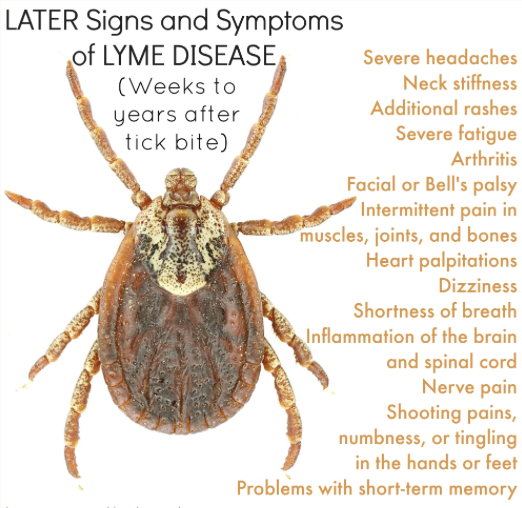
The symptoms show up differently in everyone, but there are common denominators. Lyme disease symptoms look different in kids than they do in adults. The symptoms are commonly mistaken as mental health issues and stomach problems. This combinations baffles most doctors and they blame the problems on the patient, usually telling them it’s stress and anxiety, or labeling them inaccurately with ADHD or abdominal migraines. This along with inaccurate testing means that many people with LD will be treated for other diseases without finding out the root cause is a tickborne infection. The longer LD goes untreated, the more damage it does to the body and the harder it is to treat. I often see many of the symptoms listed below that have been misdiagnosed as abdominal migraines, growing pains, irritable bowel disorder, ADHD, learning disorders, anxiety, depression, and multiple other issues that continue to progress and worsen.
Lyme disease in kids looks like…

- severe fatigue
- headaches/migraines
- insomnia/sleep issues
- trouble concentrating/focusing
- inability to sustain attention
- difficulty expressing thoughts
- brain fog
- difficulty reading and writing
- easily overwhelmed
- difficulty making decisions, can’t decide.
- confusion
- uncharacteristic behavior
- outbursts and mood swings
- fevers
- joint pain
- dizziness
- noise and light sensitivity
- “growing pains” that are ongoing
- muscle weakness
Adults will also notice many of the above symptoms but chalk it up to stress or aging. Adults often have the joint pain (neck, hips, knees) that is well known. This has a lot to do with the organism migrating to cartilage and connective tissue. This is one the reasons LD is hard to treat, the organism “hides” in cartilage, and the antibiotics are not getting there. Interestingly, children usually do not complain of joint pain, but instead present with “growing pains” and ongoing headaches.
Let’s talk a little about testing.
Traditional testing through labs like Labcorp and Quest report false negative tests up to 60% of the time. This means many people with Lyme disease and co-infections will think they do not have the disease. The traditional labs are looking for antibodies that the immune system has made to combat the disease. Sadly, Lyme disease weakens immune function and the body doesn’t make the antibodies needed to fight off the illness. Using a lab that specializes in detection of Lyme Disease and other co-infections is often necessary for accurate diagnosis. Finding a medical provider that is familiar with these labs is an important part of proper diagnosis and treatment.
Treating Lyme Disease is tricky
Most medical providers are told that 10 days of antibiotics will get rid of Lyme disease. This is rarely true. The only cases I’ve seen eradicated by antibiotics were those that were treated immediately upon site of a bull’s-eye rash (erythema migrans) for a minimum of 2-3 months, usually using doxycycline. Those that I have seen treated for just 10-21 days usually have symptoms that show back up after the antibiotics are complete. This can be difficult with children, because the symptoms are often easily dismissed as everyday problems like stomach pain, headaches, picky eating, trouble focusing, being emotional, behavior issues, and on-going “growing pains”.
I can’t give you a specific protocol to treat Lyme disease because everyone is affected differently, it’s important to identify the specific needs of each patient, and then develop a plan. There are some guidelines to these plans. The first goal in treatment should be to decrease inflammation and balance the gut microbiome. Notice I didn’t say treat the organism. Often, when we treat first, we see worsening symptoms and that can increase inflammation and interfere with healing. It’s important to balance the gut and boost immune function so that treatment is most effective. Most providers that I work with prefer to use herbal therapies to treat the actual organism. Different herbal blends are going to be more effective for different organisms. I usually expect treatment to take 6-12 months, and usually depends on how long they’ve had the disease and how extreme the symptoms are.
Treating Lyme Disease and other tickborne infections is challenging. If your child or a child you know is suffering with any of the above symptoms, please look for the root cause. Be sure to find a medical provider that knows how to test for and appropriately treat Lyme Disease and co-infections. You will need to go outside of your traditional medical realm, and find a provider that practices Functional Medicine. You’re welcome to contact me if you’re in Maryland, Virginia, Delaware, Florida, Illinois, Nevada, or Oregon, I can help via telehealth. You’ll want to contact my team at Well Rooted Pediatrics to make an appointment. If you are outside of one of these states, check the provider directory from the Medical Academy of Pediatrics and Special Needs. If you are an adult suffering with symptoms, please consider contacting my friends in Annapolis, MD at Mid-Atlantic Health Institute.
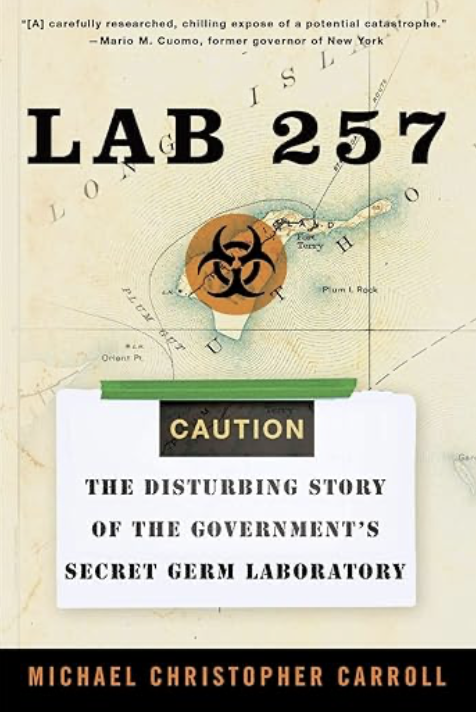
Lyme disease can be a debilitating and deadly disease. Don’t let it interfere with your child’s ability to live a fun and fulfilling life. If you want to learn more about Lyme Disease, I highly recommend the books, Lab 257, by Michael Carroll, and Bitten, by Kris Newby. I would also recommend watching the movie, The Quiet Epidemic on Amazon Prime, it’s worth the few dollars, I promise.

(*no affiliate links in this article)

 Health and Wellness w Katie