Podcasts

Click image to listen to this episode

Talk about stepping out of your comfort zone! But I did… Yay, me!! DO NOT, I repeat… DO NOT let anxiety and fear stop you from doing the things you know you’re meant to do!

DO ALL THE THINGS!!!

Recently, I was invited to join a new friend on some of her podcasts. I’m all about sharing health and wellness info, but hearing my voice on a podcast that can be heard all over the world… WHOA! Who am I?!? Exciting stuff!! I want to make sure you can find all my guest appearances in one place, so here ya go…

I first joined Alexa on The Alexa Z Show, Meditation Motivation in January. Alexa invited my colleague, Danielle McDevitt, MD, and I to discuss Integrative Medicine and What It Really Is. We talked about chronic inflammation, all the ways it can affect the body and lead to that infamous “fight or flight” response. We made sure to mention a few ways to change that “fight or flight” back to “rest and digest”. Important Stuff! We had a blast doing the first one, so decided to do a few more.

Our second episode is about ADHD and Anxiety in our Youth. If you’ve been following me for a while, you know this is a topic that is close to home for my family. Alexa and I dig into the topic of neuroinflammation, discuss neurotransmitter function, and how they each play a role in the disease process. We talk about some of the root causes of neuroinflammation, and how that inflammation can lead to other diseases. The most important part- we talk about how you can change things! Change your health, change your life. Change your life, change your health. Enter meditation and other integrative therapies. If you want to read more about neuroinflammation, I wrote Is it Really ADHD? to address that very topic.

One of the most important bits of info I can share with you is a quote from our recent podcast, “The genetics you’re born with do not dictate your health, the environment you put those genetics in will dictate your health… that’s a whole new field of science called epigenetics that’s developed over the last 20 years and it’s fascinating!” ~KPTolley

In our next episode, we plan to discuss Lyme Disease. Lyme Disease is pretty controversial nowadays. It’s characterized by widespread pain, overwhelming fatigue, and memory issues, along with a list of other problems that disturb almost every system in the body, especially the immune system and nervous system. We’ll discuss symptoms, disease process, diagnostic challenges, treatment challenges and how alternative therapies like meditation play such a big role in the recovery process. Be sure to tune in next month.

If you have any questions about medication or topics that you’d like to hear Alexa and I discuss, please reach out and let us know! If you want to learn more about meditating or you’re looking for a meditation coach, Alexa is your gal!

Be Well!! Kp

Adaptogenic Herbs: Mother Nature’s Secret Medicine

It wasn’t until a few years ago that I’d even heard the term “Adaptogenic Herbs” and when I did I still wasn’t quite sure what they were or what they did.

Adapt means to modify, change or restructure. Adaptgenic herbs have the amazing ability to modify, change and restructure our body at a cellular level.

According to Merriam-Webster, the definition of an adaptogen is “a nontoxic substance and especially a plant extract that is held to increase the body’s ability to resist the damaging effects of stress and promote or restore normal physiological functioning”.

So, let’s think about this a minute, there is a natural substance, actually multiple substances that will help the body combat stress. Our bodies are stressed by a plethera of environmental factors daily. So many health issues are stress related. Could this be an answer?

Over the past week, I’ve watched a video series on Herbal medicine. Did you know that Herbalism as a medical practice was outlawed in the United States over 100 years ago? This is downright sad, because it has started to erase the knowledge we need to have about natural forms of medical treatments, treatments that are successfully practiced in other parts of the world everyday.

So many ailments that are considered common health issues could be reveresed with the addition of adaptogens. Adaptogenic herbs can treat and prevent diseases like Depression, Anxiety, ADHD, Chronic Fatigue, Insomnia, Brain Fog, Demenitia problems, neurological disorders like MS and Parkinson’s and Alzheimer’s, cardiovascular disorders like high cholesterol and high blood pressure, digestive disorders, adrenal fatigue, thyroid imbalance, and the list goes on and on. If you name any chronic disease, adaptognic herbs will probably make it better. They get to the source of the problem.

Often times, we take pills for symptoms, but we forget that those symptoms are signs, they show up for a reason. Adaptognic herbs get to the source of the problem. Adding adaptogenic herbs to my nutrition plan has decrease the need for all the medications that I used to take for asthma, anxiety, irritable bowel syndrome, fibormalgia, allergies, migraines and more. It’s been an incredible transformation. I rarely even go to the pharmacy anymore.

Boosting my immune system and fighting the chronic inflammation and stress that my body is constantly battling with adaptogenic herbs and other holistic nutrition remedies has changed my health 100%. It’s hard to believe I’m the same sick person that cried and suffered with pain from IBS and Fibro and Migraines.

Let me share a list of things adaptogens can do:

  • increase endurance
  • increase libido
  • decrease stress (actually decrease cortisol levels!!)
  • boost immune function
  • decrease inflammation
  • provide allergy relief
  • decrease anxiety and elevate mood
  • regulate sleep
  • strengthen digestive system
  • strengthen cardivascular system
  • calm the nervous system
  • balance hormones
  • balances adrenal function

These adaptogenic herbs are plants and fungi; and with some the roots hold the magic elixir. These are herbs like Ashaganda, Astragalus, Holy Basil, Reishi, Miataki, Shiitake, Rhodiola, Maca, Chaga, Shishandra and Cordyceps, just to name a few. You’ve probably heard their names buzzing around, but weren’t really sure what was so great about them. Now you know!

Now you need to know how your get your hands on them, right?? Um, y’all… why do you think I keep talking about my superfoods? THIS! THESE! These amazing Adaptogens! All of the above are in Shakeology! All of the health issues listed above that people struggle with, that I’ve struggled with, are better now that I have the antiinflammatory effects of these amazing superfoods helping my body.

“THIS IS WHERE I GET MY ENERGY,” says the girl with the Chronic Fatigue Syndrome.

We all deal with stress, we can’t avoid it, that’s just how life is in the 21st century. If we want to live our healthiest, we need to actively do what we can to combat the enrionmental stress our bodies are exposed to each and every day. Counteracting that stress at the cellular level in our body is the secret to staying well.

And, let’s face it, we all know we can’t get those adaptogenic effects in the Standard American Diet no matter how well we eat, our food just doesn’t have the nutrition we need. We need immune boosting, antiinflammatory nutrition to be healthy. That’s why I add my adaptogens, along with some other superfoods.

IMG_5767

I can’t wait to help you learn more about getting healthy and feeling better!

If you need help navitaging your wellness journey, I’d be happy to help. I love helping people learn what they can do to take control of their health and the health of their family.  It’s empowering for them, and it fills my cup right up! If you want to work with me, just send me a message and we can chat up a plan for you! If you want to check out my website to place an order or start working with me, click here. I can’t wait to hear from you!

Feel free to contact me: FacebookInstagram – or Email me: katie@katiepinktolley.com


This slideshow requires JavaScript.

If you want to read a little more about some of the scientific stuff, like the info I found in this article, just click on the text: “..recent pharmacological studies of a number of adaptogens have provided a rationale for these effects also at the molecular level. It was discovered that the stress—protective activity of adaptogens was associated with regulation of homeostasis via several mechanisms of action, which was linked with the hypothalamic-pituitary-adrenal axis and the regulation of key mediators of stress response…”  (*info from US National Library of Medical National Institute of Health)

What IS Gluten Anyway?? – Digestive Health Lesson #4

gluten-freeGluten is the latest buzz word in nutrition.

But, so many people have no idea what it is.

When friends of mine with PhD’s start asking for more info, it’s time for an article about gluten and why it’s a problem.

So, What is Gluten??

Gluten is a the protein found in the seed of wheat, barley, and rye.

the-gluten-protein-is-mainly-found-in-the-endosperm-of-grain-kernel-seedHere is definition from Celiac.org:

Gluten is a general name for the proteins found in wheat (wheatberries, durum, emmer, semolina, spelt, farina, farro, graham, KAMUT® khorasan wheat and einkorn), rye, barley and triticale – a cross between wheat and rye. Gluten helps foods maintain their shape, acting as a glue that holds food together. Gluten can be found in many types of foods, even ones that would not be expected.
Read more here.

Why is it a problem? 

Gluten per se isn’t the problem for everyone (more on that below). It’s the amount of gluten in the standard american diet, and the tampering of the native seed.

When you look at the diets of most Americans, approximately 80% of meals have a gluten component. There is too much bread, breading, pasta, crackers, croutons, tortillas, etc. in our meals.

Gluten can be inflammatory for many people, too much gluten can be inflammatory for anyone. Inflammation can lead to other chronic diseases, I talk more about that in my article explaining how Inflammation is the root of most disease.

Chronic inflammation occurs because of a process called Intestinal Hyperpermeability, aka, Leaky Gut. I explain this process and how it leads to chronic inflammation in my first digestive health article.

The lifelong health issues I have come from being sensitive to gluten and dairy, but I do not have Celiac Disease and my sensitivity does not show up on allergy testing. That means absolutely nothing though. I learned more about Gluten sensitivity from a GI Specialist last spring during a Pediatric Conference at Children’s Hospital of Philadelphia (CHOP). Here are the numbers he shared…

  • 10% of our population has Celiac Disease
    • These people CANNOT eat gluten without major symptoms.
    • Many people in our population are undiagnosed, continuing to eat gluten will cause multiple health problems. Think ADHD, Thyroid issues, Irritable Bowel, Autism, Epilepsy, and the list goes on.
  • 40% of our population has Gluten Sensitivity
    • Symptoms are more subtle than Celiac Disease; stomach pain, headache, sinus issues, eczema, constipation, brain fog, lethargy, food cravings, mood swings, depression, anxiety, focus issues, etc.
    • It will get worse.
    • It will cause chronic inflammation and intestinal hyperpermeability.
    • It will most likely cause Celiac Disease if gluten is continually consumed, and will definitely lead to a host of other disease processes. (Please refer to the digestive health articles above for more details.)
    • **If you read some research, please note, some people in modern medicine will tell you there is no way to confirm gluten sensitivity. THIS IS NOT TRUE!! There is a way for doctors to check for gluten sensitivity!! It’s as easy as running a simple blood test for gluten immunoglobulins. I know this, because that’s how we found out my son cannot have gluten. When his Holistic Doctor did labs, the antibodies for gluten and wheat were 5-6 times normal. His Celiac tests and allergy tests are negative. I also know this because one of the top specialist in GI Pediatrics told me all the same stuff himself with research and a groovy powerpoint presentation!

One of the biggest reasons we need more awareness and sensitivity is the vast amount of food that contains gluten, and the vast amount of people, especially children that should not be eating it. If we look at the percentages above, 50% of our population should avoid gluten, yet, 80-90% of our public food choices contain gluten.

THIS IS A HUGE PROBLEM FOR OUR CHILDREN AND FOR OUR FUTURE!!!brain-fog

If you think it’s hard to function as an adult with stomach pain and headaches and brain fog, try being a kid, sitting in school after eating mostly gluten for breakfast AND lunch and having anxiety and mood swings… Is it the kid? NO, it’s his food! AND IT’S CHANGING HIS FUTURE! And, he’s a problem in class sitting next to your kid, and that’s why you should care!

I could go on about how reducing our gluten intake has changed my family’s health, but I’ll invite you to read through my blog a little more to find that out, there’s plenty of evidence.

If you want to read how gluten breaks down in our system and causes damage, read how “Getting ‘Glutened’ is Drugging My Kid!!”

I share because I care. I want a better world for me and you and our children.

Please, practice wellness so you live a happier and healthier life. Your loved ones will be awfully glad you did! Enjoy the Journey! 🙂

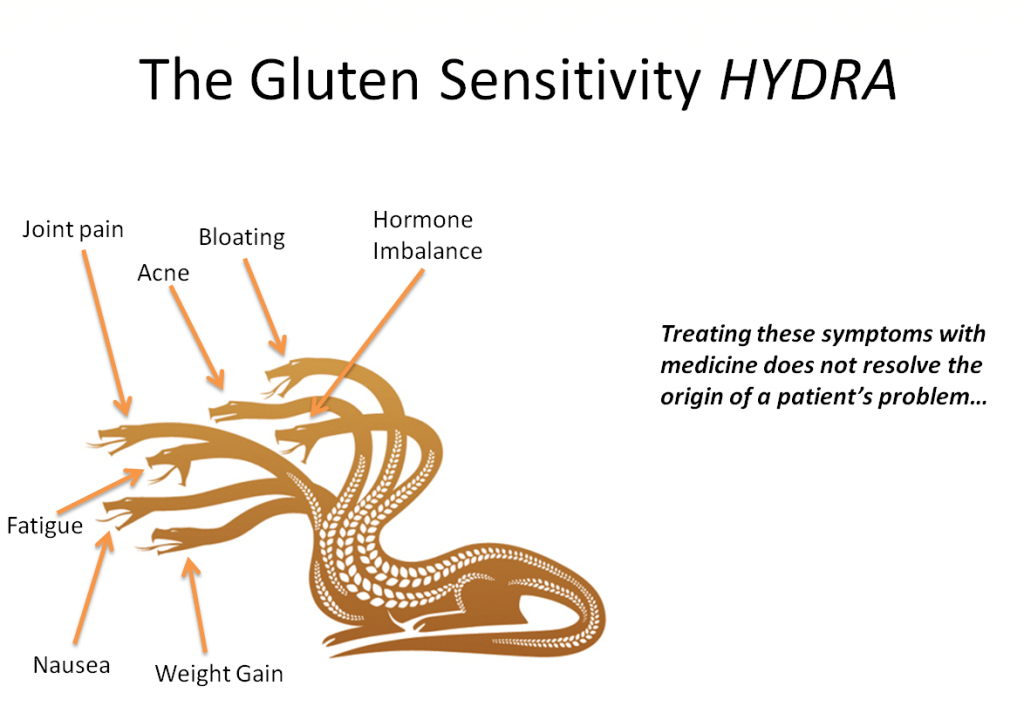
Gluten-Sensitivity-Hydra-Pic-1024x713.png

Photo compliments of glutenfreesociety.org 


Getting ‘Glutened’ is Drugging My Kid! I’ve had it!! (Digestive Health Series, Part 3)


So, What does getting ‘glutened’ look like?

A. Laziness, fatigue

B. Anxious, depressed, irritable, angry

C. Disoriented, unaware, spaced out, Cognitive dysfunction

D. Stomach ache, migraine, joint pain

E. All of the above and then some!!!

Anyone that has talked with me knows this is a hot topic for me. What angers me the most is the total disregard of our society for the people that have true dietary issues that are ignored by the general population, including much of the medical population. As a nurse practitioner, I don’t like to say we’re missing things in medicine, but… WE ARE MISSING THINGS!!!!

As a mom, I knew there was more to it, and I knew I needed to keep searching for answers. Never. Give. Up. That’s going to be the name of my book. I’m not really a very good writer, avoided it like the plague in school. I have no idea where to start with a book, but it’s a goal of mine, and I need to share our story with other families. Moms need to know that it is worth every bit of energy you use figuring out how to help your child. 

He is so bright, it puts him on a different level. Friends started noticing it before I did, he put concepts together that 2 year olds just didn’t put together. He was smarter than some of the adults in his world and it caused problems. Problems that gradually got worse as the years went on. There were jokes about Einstein being thrown out of school, he even has a hat with Al on it. But, seriously, it took a decade of lots of struggles and difficulties to realize he wasn’t going to get better with prescriptions or school accommodation or anything else traditionally done for bright, ADHD kids. We’d been trying for years, and things were just getting worse… WHY???  Continue reading

Digestive Health Lesson #2 – It all Starts with Inflammation

Dr. Tanya Edwards, director of the Center for Integrative Medicine (Cleveland), wrote that inflammation is now recognized as the underlying basis of a significant number of diseases.

Inflammation

Inflammation 101

Inflammation defined by the free online medical dictionary: 1. A localized protective response elicited by injury or destruction of tissues, which serves to destroy, dilute, or wall off both the injurious agent and the injured tissue.  2.The inflammatory response can be provoked by physical, chemical, and biologic agents, including mechanical trauma, exposure to excessive amounts of sunlight, x-rays and radioactive materials, corrosive chemicals, extremes of heat and cold, or by infectious agents such as bacteria, viruses, and other pathogenic microorganisms. Although these infectious agents can produce inflammation, infection and inflammation are not synonymous.

Dr. Edwards points out that anti-inflammatory foods have been used to combat Cancer and many other diseases, i.e.: Parkinson’s disease, Alzheimer’s Disease, many Autoimmune diseases, asthma. Here is the abstract from her article:  Continue reading

Digestive Health Lesson #1: Leaky Gut

“ALL DISEASE BEGINS IN THE GUT.” – Hippocrates

hippocrates

I can pinpoint my gut issues all the way back to middle school in the suburban brick rancher I grew up in, and more specifically right down to the bowl of gravy, loaf of bread, my friend Lori, the stomach pain, and the bloating that came along with it. Those problems go way back. This is just one example of the bad food exposure that I subjected myself to growing up. Many of us did, we didn’t know it was that big a deal. What damage could it possibly cause, we were 14, just kids. Yes, well, so is my boy now, and his issues seem to have a similar root cause. Food. The wrong vs. the right… My issues manifested as irritable bowel, asthma, acne, eczema, and eventually fibromyalgia. My boy, Josh has multiple gastrointestinal and neurological symptoms, and has dealt with them most of his life.

stomach painHow do we know it’s food? Continue reading

YOU’RE WRONG!! That’s not it at all….


child-punishment-120514

The kindergartener that knows the right answer, but won’t raise his hand.

The 7th grader that goes to the nurse for a “bandaid” a little too often.

The student with a headache before math class EVERY day.

The kid that just keeps making jokes and disturbing class.

The 2nd grader that STOPPED and put her pencil down on the second problem.

The 8th grader avoiding class because there’s just TOO many people.

The 6th grader with more than occasional stomach ache.

The class clown that’s avoiding what he doesn’t know.

The 3rd grader that’s pretty damn smart, but says, “I can’t do that!” when faced with a more mentally challenging task.

The 1st grader that runs in school even after being told to STOP, not because he’s defiant or has ADHD, but because there is thunder and lightening outside!

The 9th grader who can’t pay attention in class because she can’t fall asleep at night worrying about her grades.

The 1st grader that resists help and completely melts down.

The 8th grader that thinks life is going to end when she gets a C.

The kid that asks to go to the bathroom, but talks to every adult and child along the way to avoid the unknown and awkward feeling of going back to class and NOT fitting in.

Kids don’t have panic attacks…

Kids avoid.  Kids hide.

KIDS DO NOT ASK FOR HELP!!!

Kids repress.

They run away.

They back into a corner with their hands over their ears.

They complain about “nothing.”

They fight back.

They need adults that know the difference.

THEY. NEED. US. TO. UNDERSTAND.

We need to recognize childhood anxiety!

Before it’s too late…..

#think globally

#YOUcanmakeadifferenceforjust1kid

* I know each and every one of these children, they are real, they struggle. Do you know how many children struggle? More than you think. >25% and 1/2 are likely not diagnosed, so you see there is a gross underestimate statistically.

Experiment #1: Essential Oils (doTERRA Vetiver)

Hi friends! I’m so excited to share my journey with essential oils with you. I started using doTerra CPTG Essential Oils about a month ago, and I. AM. HOOKED.

And calmer. More focused. More grounded. More aware. And, thankfully, less stressed.

So, what have we been using so far?  The standard trio that everyone has heard of: lavender, lemon, and peppermint. We’ve been diffusing them in the house and bedrooms. Just a drop of lemon on a tissue on my desk will help get me through the day.

I’m sure you are you wondering what EXPERIMENT #1 is?

I read a study about the effects of Vetiver Essential Oil for focus.

I think y’all now know where this is going… Josh will be trying vetiver. My boy could use a little assistance staying grounded and focused.

IMG_1316

Poor Josh. My guinea pig. That sweet kid is either going to hate me or thank me someday.

Hopefully, he continues to play nice. He’s been pretty cooperative at home. He’s taking some to school tomorrow, just a few drops on a tissue. Tonight, he chose to mix it with Wild Orange. It is next to his bed, and we will diffuse it in the morning with Wild Orange, Citrus Blend, and I think I’m going to add a little Lemon too (it’s uplifting).

We’ve been changing all kinds of things in our world to help Josh with his ADHD and anxiety. Helping Josh only helps the rest of us, he isn’t the only one with challenges.

I’ll be sharing all the new and mind blowing information about the alternative approaches we are trying in another post soon.

I’ll keep you posted about Experiment #1 when I tell you about Experiment #2, sinus issues anyone?

Until then, Enjoy the Journey, friends! 😉

If you are interested in more info, please contact me.

*Using essential oils can assist you on your path to ultimate health and wellness. Please be advised that Essential Oil practices discussed on this website are not intended to replace the advice of your medical provider. Please learn about essential oils before you use them. 

ADHD: Non-medication help…

ADHD kidIt seems like every day I have another parent asking me if their child has ADHD (aka Attention Deficit/Hyperactivity Disorder). The answer isn’t an easy one, neither is the solution. I wrote a post trying to help answer this very question. If you want more information about how to know if your child’s behavior may or may not be ADHD, read Is it Really ADHD?

If you think your child has ADHD, but aren’t sure if they need medication or not, there are some things you can do that should help. Will these effective parenting tips keep your child from needing medication? No. If a child is in need of medication, then, I recommend medicating them. Medication alone can not help a child that is truly ADHD. The most effective treatment is medication along with therapy and effective parenting. 

I’ve talked before about effective parenting. I don’t think enough attention is paid to the importance of proper parenting. I see parents that want me to fix their child, when the problem is that the child is in need of consistency and routine. Children NEED consistent routines, especially children with ADHD.

  • Routine is unbelievably important. Doing things according to a schedule helps a child learn what to anticipate day after day. Using lists or pictures can be helpful to remind children what they are responsible for and keep them on task. Even with routine, your ADHD child will still need help getting everything done.
  • Make sure the rules are clear and followed consistently. If you have rules that are only enforced some of the time, the child will not know when they do or don’t have to follow the rules. This leads to frustration for the child and the parent. And, needless to say, inconsistent results!
  • Give the kids something to be responsible for…this could be helping to take care of pets, taking out the trash, or other chores around the house. This helps the child feel important, learn responsibility, and also builds self-esteem. You will have to remind your child to do their chores, it isn’t going to just happen. Having a list and checking off chores/responsibilities as they accomplish them can be helpful, and is a good way to reinforce good behavior.
  • Praise and Positive Reinforcement is a must for disciplining all children, especially children with ADHD. Recognize & Praise good behavior and accomplishments. Just getting homework or small chores done can be challenging for children with attention issues.
  • Limit “screen time” – This includes all screens, such as TV, video games, computer, etc. Screen time should be limited to just 2-3 hours per day, and should be turned off at least 1 hour before bedtime. This isn’t hard to enforce during the school year because there is limited free time after school. It is a little more challenging during the Summer. Being more liberal with this rule during the summer is ok, just remember, you will see a difference in the child’s behavior; and it is essential to get back into a school routine a week or 2 before school actually starts.
  • Have a good bedtime routine with an acceptable bedtime. Kids in preschool and early elementary grades should be in bed by 7:30-8:30, upper elementary should be 8:30-9, middle school 9-9:30, and high school should be between 9-10. For more information about sleep, please see my blog, Sleep is Crucial for Healthy Development. A tired child has trouble focusing, paying attention, and retaining information. For preschool aged children, there is a significant correlation between hyperactive and impulsive behavior and short sleep duration.
  • Watch what your child is eating, 3 healthy meals and snacks are important for good brain function. Adding essential fatty acids to a child’s diet helps promote good brain function. Eliminate artificial food dyes (AFDs) from the child’s diet. AFDs have been proven to increase hyperactivity in the majority of children. A study done in Great Britain in 2006 documented that 75% of children demonstrated hyperactive behavior correlated with ingestion of AFDs and Sodium Benzoate. I have recommended this intervention to many families, and received many Thank You’s because it makes such an obvious difference in the child’s behavior. I firmly believe that AFDs should be eliminated from our food supply altogether. AFDs have been outlawed in Canada, Britain, Germany and a few other countries.
  • If your child has allergies, treat allergies with a daily allergy medication. Allergies can make ADHD worse! Allergies are a hypersensitivity, ADHD is a hypersensitive state…1+1=2, it’s that simple (not really, but treatment is a must).
  • Exercise, exercise, exercise! Physical activity helps to regulate the neurotransmitters that are dysfunctional in those with ADHD. Participation in sports can be helpful and rewarding for your child. Daily outside time, even when it’s cold should be the norm. Tell your kids to run around the house a few laps before dinnertime, it gets the wiggles out.
  • Whatever your child is good at, encourage it! Whether their forte’ is math, sports, or creating, encourage it! Without our multitasking, intelligent ADHDers, we would not have telephones, airplanes, or many of the inventions and discoveries we take for granted everyday. My above mentioned ADHD post expands on this, even listing all the famous people throughout history that have/had ADHD, check it out!

These interventions take time and effort on the part of parents. They are useful for all kids of all ages, but especially necessary for kids with ADHD. Many of these interventions are just good, effective parenting. 

If a child is in need of medication, these interventions will NOT replace the need for medicating the child. There are typically side effects of medication for most kids, and this can be worrisome to parents. Some of the side effects can be decreased appetite when med is at it’s peak, headaches, stomach aches, mood swings, and sleep issues. It’s important to figure out if the medication is actually to blame, or if there is another underlying reason for the unwanted symptoms. For example, most ADHD kids will have trouble falling asleep, it may be the ADHD or too much screen time, and not the medication. It’s also important to evaluate which is worse, the side effects or the effects of untreated ADHD?? In my professional and personal opinion, the effects of untreated ADHD can be much worse than the side effects of the medication. Trust me, I’m living the ADHD thing with my son. Look for a post on untreated ADHD soon.

Having an ADHD child takes effort, patience, and frequently a little wine. 😉 ADHD children are challenging, difficult to parent, and also rewarding. Those creative ADHD minds are awesome to watch create, absolutely fascinating sometimes. So, if you are dealing with an ADHDer, don’t forget to stop and look at the positive side of this challenge. These ADHDers are going to do amazing things for society, they just need a little TLC, and A LOT of guidance to get there.

Good luck, and regardless of the challenges…. don’t forget to ENJOY THE JOURNEY!


Sleep is Crucial for Healthy Development

Amount and quality of sleep impacts children in every aspect imaginable. Sleep is crucial for proper growth and development, as well as daily functioning. Sleep is essential for neural development, and even a modest decrease in adequate sleep can decrease cognitive ability. According to The Journal of Developmental and Pediatric Behavior, there is a link between preschoolers who sleep less than 10 hours a day and behavior problems.  There is a significant correlation between hyperactive and impulsive behavior and short sleep duration.

I meet many parents that don’t understand the importance of sleep. I have parents bring their kids in to be evaluated for ADHD  and one of the first things we discuss is sleep. If a child is having sleep problems, we need to help correct the sleep issues before thinking about ADHD as the problem, it could be sleep deprivation.

Some parents will tell me their child goes to bed when they get tired. REALLY?? I’m thinking this doesn’t usually go over well. This may work on rare occasions when the child goes to bed at a reasonable time and is following the bodies natural sleep signals. Most children have a natural “window” when they will exhibit signs of sleepiness; rubbing eyes, slowing of activity, etc. If the child doesn’t go to bed during this time, they have an adrenaline rush, which keeps them up for a few more hours, and way past their bedtime!

Children should be expected to sleep in their own bed, and have a good bedtime ritual and schedule from a very young age. Good sleep hygiene makes all the difference as children grow and develop into adulthood. I’m not an advocate of co-sleeping. It may work for some families, but most of the time, the kids disturb the parents, and the parents disturb the kids. I’m all for early morning cuddling, after everyone has had a good nights sleep.

Getting an inadequate amount of sleep actually leads to nighttime wakening. For a child that is having trouble sleeping through the night, it is important to make sure the child is actually getting enough sleep. When children are tired, they will actually show signs of hyperactivity and irritability rather than signs of being tired.

Are their medical reasons that a child may not sleep well?? YES!! Children with Attention Deficit Hyperactivity Disorder (ADHD) often have trouble falling asleep because they have trouble turning their brain off. When it comes to sleep and ADHD, each affects the other… ADHD can interfere with sleep, and sleep can make ADHD worse! Talk about a double edged sword…  When Josh was a baby we put him to bed with classical music for the first 2 years of his life, this worked wonders, but he decided he didn’t want it anymore when he was 2. Now, we use a “white noise” machine. If you are worried you child may have ADHD, check out my post Hyperactive or just busy…Could your child have ADHD?

Another medical problem that could interfere with adequate sleep is sleep apnea. Children that have allergies, causing swollen tonsils and adenoids, can have sleep apnea. For allergy info, check out Springtime & Sneezes…You might have allergies if… Children that  suffer from obesity are also high-risk for sleep apnea. Obesity can cause many other medical problems that I will address in a future post.

So, what can we do as parents to help our children get adequate sleep??

  • A good bedtime routine can help; bath, book, then bed is a common mantra of mine.
  • Read before bed, but read books for pleasure, or magazines, things that are of interest to the child. I love going into Joshua’s room at night and finding him asleep on top of his book! 🙂
  • Nightlights are helpful for young kids that have fears related to the dark, making it difficult for them to fall asleep.
  • NO TVs in the bedroom!! This cannot be emphasized enough, NO TV IN THE BEDROOM!!
  • Turn off all screens (TV, computer, ipod, phone texting, etc.) 1 hour before lights out.
  • a “white noise” machine, this is my kids favorite! You can get them with different sounds: rain, ocean, rain forest, waterfall, summer night, etc.

A child that doesn’t get enough sleep will be at risk for behavior problems, decreased immune function, increased irritability, inability to play independently, inability to learn from the environment, and interference with proper growth and development.  Lack of sleep can also increase a child’s risk for obesity, depression, diabetes, and cardiovascular disease.  It can also affect emotional well-being, performance, productivity, and cognitive ability. 

When I tell you about kids and sleep problems, I’m telling you not only from education but from experience. Joshua has had trouble falling asleep since he was a toddler.  Does it have anything to do with his ADHD? I’m sure it does. He could be the perfect case study of a child with proper sleep and then without.  He can be such a sweet, intelligent, polite, mannerly, inquisitive, interesting, funny guy. With no sleep, he turns into the Tasmanian devil.  He is whiny, irritable, fatigued, twirling his hair, and literally twirls in circles.  Wow, what a difference sleep can make. I have no doubt that Josh gets his sleep issues from genetics as well, I have problems with sleep sometimes too. My problems are because of a disease called fibromyalgia. Fibromyalgia severely impacts one’s sleep. Inadequate sleep makes fibromyalgia worse. Interesting how all of these medical conditions have a reciprocal impact on one’s sleep and one’s health.

Sleep is important for all of us! Make it a priority for your children and it will make your parenting journey a little bit easier…Promise! 😉

Sweet Dreams and don’t forget to Enjoy the Journey!