Big HUGS for Valentines and everyday!

The most important thing you can give your child is YOU!!

Your time, attention and love are the number one thing that can make your child happy!!

So, everyday, but, especially today be sure to squeeze your kids extra tight and let them know they are a priority in your world!!

It’s a great journey – ENJOY!

Happy Valentines Day!! 

Yuck, the “throw ups”…Do I need to be worried because my child is vomiting??

Well, tonight’s post wrote itself when friends of mine called to make sure they were doing the right thing for their daughter that had been vomiting all day. I saw kids of all ages today that had nausea, vomiting and diarrhea.  So, it sounds like the best parenting advice right now would be on managing that nasty stomach virus also know as gastroenteritis.

Poor little Maddie has been vomiting all day.  Her brother had vomiting and diarrhea a few days ago, and now it sounds like it’s her turn.  One question her Dad had; could it be something else? Well, maybe…but, probably not.  Dad told me he had been giving Maddie about a 1/2 ounce of Gatorade every 20 minutes or so.  She had been doing fairly well, then started having really bad stomach cramps. It seems that Maddie took a big drink of Mom’s tea, which wasn’t a good idea, but who can blame her, she was probably really thirsty.  Maddie probably had more than her stomach was able to tolerate.  It probably didn’t help that the tea had caffeine in it, which can be irritating to an empty stomach.  Drinking too much or eating or drinking the wrong thing can cause the pain and vomiting to start again. With rest and small amounts of fluids, Maddie will probably get throght this stomach virus just fine.  Slowly staying hydrated, and then eating small amounts of bland foods.  No doubt, she will be back to her happy playful self, and keeping up with that brother of hers.

Most vomiting spells will usually last 8-12 hours, but can come and go for a few days.  If your child vomits for more than 24-48 hours, you might want to consider having them evaluated by their pediatric provider.

Most children will have diarrhea with or after vomiting. This is just another way for the virus to exit the body.  Do not give children medication to stop the diarrhea or vomiting.  If this is necessary, medication should be prescribed and supervised by your provider.

Dehydration is usually the worst complication of gastroenteritis. Keeping your child hydrated after the initial vomiting spell is very important.  If your child is vomiting, don’t give anything by mouth the first couple hours; then give small sips of pedialyte or Gatorade (1/2 oz.) every 15-20 minutes.  For young children, Pedialyte popsicles can be really helpful.

If children tolerate fluids after several hours, try bland foods such as saltine crackers and toast.  Slowly, increase the diet with bland, salty foods over the next few days.  Do not give your child milk products, acidic products, or greasy foods. French fries and chicken nuggets are NOT a good idea.  Yes, too many parents of 3 or 4 years old children will come into my office and say, “Well, she said she would eat chicken nuggets” (or hot dogs, you can fill in with either)…. I want to scream “Are you kidding me?”   Fortunately, I learned to bite my tongue a few years back.  Trust me, it took some practice, I usually say what I think, but have learned that I just can’t do that sometimes.  Those of you that know me are smiling and laughing right now, no doubt. 😉

So, What else could it be??

  • Some people are concerned that their child could have appendicitis.  Believe me, that is the first thing I want to make sure a child doesn’t have either.  Appendicitis does need to be ruled out if a child is having severe or ongoing abdominal pain.  Appendix pain is usually in the lower right quadrant of the abdomen, but the pain can radiate elsewhere.  If you are worried your child may have signs of appendicitis, please see your provider.  This is not an easy diagnosis to make, even with physical exam.
  • Sometimes children will have vomiting, with a fever, sore throat and headache; beware, this can be strep throat.  Some children with strep throat will vomit.  My poor Joshua is one of these kids.  He has only had strep twice in his life,  first, with pneumonia.  Then, a few years ago he presented as fever, nausea and sore throat.  The poor kid vomiting for over 8 hours, he was pitiful.  If I hadn’t seen the positive strep test myself, I would have really thought it was a stomach virus.  It’s always safest to check if you have any doubt.  Strep throat cannot be confirmed without a throat culture, and MUST be treated with an antibiotic.

Again, I want to stress the importance of HYDRATION! Slow but steady hydration is the key to avoiding dehydration. If your child does not urinate at least once in 12 hours, please have him evaluated for dehydration.  Fever, along with vomiting and diarrhea can increase the risk for dehydration.  For more advice on fevers or hydration, please see my related posts.

Remember, sick kids need a little more patience, understanding, and TLC.

At some time or another, a vomiting child is something we all deal with….kind of like a rite of passage. Every Mom or Dad has a gross vomiting story to tell. Good luck with the vomiting thing when you experience it along your parenting journey.

Let them eat cake…for breakfast??

Two thumbs up for cake for breakfast!! I was lucky enough to spend the morning taste testing wedding cake with my brother and future sister-in-law, Yummmm!!! We laughed about having cake for breakfast.  Sarah said, “this would be a good one for your blog”…I think she was right.  The smart one was Sarah’s mom, who ate an egg before our mini cake marathon.  Eggs are a great source of protein, so that was a good idea.  So,  when I thought about today’s daily dose of helpful hints, I figured I would write a bit about some nutrition basics.

So, is it really OK to eat cake for breakfast??  Not regularly, but I believe anything and everything is acceptable in moderation. Cake for a special occasion, birthday, or on vacation is no big deal no matter what time of day as long as we follow healthy eating habits and live a healthy lifestyle most of the time.

I usually let the kids go a little overboard when we are on vacation…why not, it is vacation. BTW-That’s how I get away with eating Key Lime pie for breakfast! Have you ever heard the song Kenny Chesney wrote about Key Lime Pie? Great song, it used to be the theme song in the Pilates class I taught. A little encouragement while we were exercising. 😉  My, My, My, Key Lime Pie…. (if you want to hear the song, http://www.youtube.com/watch?v=jle9Pe2NWFg)

So, now that I have you thinking about cake and pie (sorry), I’ll tell you about some Daily Nutrition Basics for everyone:

  • Eat 4-5 servings of fruits or vegetables daily.  Fruits and vegetables have essential vitamins and nutrients that our bodies need for good health.  Fruits and veggies add daily fiber, which is necessary for a healthy gastrointestinal system.  Notice this is servings per day, a large bowl of fruit or a large salad may give you multiple servings at one time.
  • Eat 2-3 servings of protein daily.  Protein builds muscle.  Muscle burns fat.  Eating protein and exercising daily can help increase lean muscle mass.  Protein comes from many sources, such as: fish, meat, eggs, beans, nuts, and peanut butter.
  • Drink your milk,  and chocolate is fine with me!! Calcium is crucial for good bone growth and development, and maintaining good bone density.  Milk and other dairy products are an excellent source of calcium.  For optimal bone health, the Institute of Medicine (IOM) recommends:  1 to 3 years old — 700 milligrams of calcium daily, 4 to 8 years old — 1000 milligrams, 9 to 18 years old — 1,300 milligrams.  One 8oz glass of milk or calcium fortified OJ has about 300mg of calcium.  For more information on Calcium intake and sources of calcium, visit. http://kidshealth.org/parent/growth/feeding/calcium.html#.
  • When eating carbohydrates, eat whole grains vs. white flour products.  Whole grains are healthier and better for our digestive system than white flour.
  • Meals should be equally balanced with protein, fiber and carbohydrates.
  • Control your potion size.  An adequate portion is the size of your fist or palm.  Keep in mind, for children, it is the size of THEIR fist or palm.  If your child wants second helpings, encourage seconds of protein and veggies before seconds of carbs.
  • And, of course, if you read any of my post, you know daily water intake is a must for proper nutrition. Check out my post on hydration for more details.

I tell my patients that they should follow these basic rules, everything else is alright in moderation. Living a healthy lifestyle consists of healthy eating habits, as well as staying active and getting regular exercise.  Yes, it’s ok to have sweets, but not all the time.

I hope these basic rules will help you keep your family happy and healthy.

So, while you enjoy the journey…. Let them eat cake!!!  😉

It’s just a “cold”…so now what??

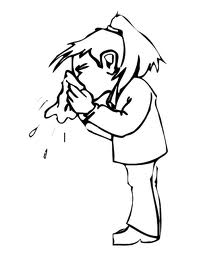
We have all suffered with colds throughout our lifetime.  A cold or URI/upper respiratory infection can be miserable. URI symptoms are cough, congestion, runny nose (clear or yellowish), low-grade fevers (<102F), sore throat, decreased appetite, disturbed sleep and overall just miserable feeling.  If fevers accompany the cough and congestion, a day off to rest isn’t a bad idea no matter what your age. If there is no fever with the cold symptoms,  most people just continue on through their daily routine.

I know what you are thinking… Yes, children do get colds more frequently than adults!  Fortunately and unfortunately, childhood is a time of building  immunity; good in the long run, but growing pains along the way.  It is true that the more organisms you are exposed to, the stronger your immune system gets.

So, what can you do to make life a little less miserable for your child with a cold??

There are a few simple rules….

Rule #1HYDRATION, HYDRATION, HYDRATION!!!  Drink plenty of fluids.  Adding Pedialyte or Vitamin water can help, this helps to replace any loss of electrolytes, salts, sugars, etc. from the cold and fever.  I’m not a fan of Gatorade, too much high fructose corn syrup. If you learn nothing else from my post, you will learn about how important it is to be hydrated! 🙂

Rule #2Blow your nose.  This is hard for young children, but can be accomplished with continued practice and effort. For babies, use saline drops and a bulb syringe to help with the nasal drainage.

Rule #3 – Increase your Vitamin C intake.  I recommend 500-1000mg to my young patients, 1000-1500mg to the adolescents.  Vitamin C is great for boosting the immune system into gear, helping it fight off the cold.  We like the chewable Vitamin C in my house, they taste like sweet-tarts, just a little more tart.  Josh ate 8 of them one day (500mg each x 8 = 4000mg), and then told me how good they were!  I told him that he really shouldn’t have that many, although Vitamin C is not toxic.  Crazy kid! (You will start seeing a pattern with this kid, he keeps us on our toes around here.)

Rule #4 – Use a cool-mist humidifier in your child’s room while they are sleeping.  Don’t forget to pull the door closed, leaving a few inches for ventilation. Keeping the child’s head elevated is helpful too. Infants should have their mattress elevated on an angle, a pillow should never be used under an infant to elevate his head.

Rule #5 – Get plenty of REST! Children and adults need to take time to rest and let their body fight off the cold.  Our bodies heal during sleep, sleep is so important to maintaining good health.  (I will address sleep soon.)

All of the above can help your child be more comfortable.  There are some other helpful hints that may or may not be useful for you.  Keep in mind, all children are different, and have similar but different needs.  Some children will be more clingy and want to be with you 24/7.

Some children just need you to hold and love them because they don’t feel good.  It makes them fell better to have your hugs and kisses.  There is nothing like the love of a parent to make you feel better!

Other helpful hints:

  • Take Motrin (Ibuprofen) for comfort.  It can also be helpful with the swelling and inflammation in the upper respiratory tract.  Nasal congestion is not just a runny nose.  Most of the little noses I see are so swollen inside,  some of them hardly have any room to breath, and many are breathing through their mouth.   I’m sure this sounds familiar, most children will breath through their mouth when they have a cold, and this is exactly why!
  • The latest research shows that giving a spoonful of honey is more helpful than a spoonful of cough medicine!  I advise my patients to use Honey for that daytime cough.  Honey tastes good, isn’t full of chemicals, and you cannot overdose on it!  I think it is great that we are getting back to natural vs. chemical!! 🙂
  • Taking an antihistamine or decongestant is helpful for some people.  I frequently recommend Benadryl (Diphenhydramine) at bedtime. I think this helps the child get some sleep and also helps to dry up some of the congestion. I think Benadryl is too sedating to give more than 1-2x a day, and don’t recommend daytime dosing unless the child is home and can nap. For Drew Elizabeth I use Claritin (Loratadine) instead of Benadryl. I do this because she has mild allergies and takes Claritin on a daily basis anyway. Also, I can give her the Claritin in the morning and it doesn’t make her sleepy. DO NOT use 2 allergy medications at the same time! Some decongestants such as Dimetapp and Robitussin can be helpful, but usually do little more than treat the cough for a few hours. DO NOT give Dimetapp Cold and Allergy with another allergy medication.  Dimetapp makes a Cold and Cough and a Cold and Allergy. Please read labels carefully!!
  • I think cough drops can be helpful too. I personally like Ricola.  No, I don’t get paid by Ricola. Do you hear the horn in the background, Riiicooolaaaa ;-)! The natural herbs just seem to be helpful for the sore throat and cough that accompany most colds.  Please keep in mind any hard object like cough drops can be a choking hazard for young children.
  • Another helpful tip that a friend reminded me of after I wrote the cough post, was sinus rinses.  Thanks, Ami Jo! 🙂 If you have never tried it, don’t knock it.  Most people will say yuck, until they have tried it.  A sinus rinse is a great way to help with a cold or allergies. I have parents that report back to me and swear by them.  Sinus rinses can be really helpful for allergy sufferers.

Please visit your child’s pediatric provider if they have a high fever, are uncomfortable when laying down (can be a sign of an ear infection because the pressure increases when they lay down), aren’t drinking and eating, or exhibit any signs of breathing problems.  Colds should get worse for a few days (3-5), then start to gradually get better.

Well, that is enough information for now, this was supposed to be a short post! Oops.  Too many helpful tips, I guess.

Keep in mind, all children are different!!  Some need more intervention then others while they suffer through yet another cold along this journey we call Life. Hope this information is helpful for all of you Moms and Dads out there! (Yes, this one’s for you, Ryan!) Thanks for reading.

I hope you are taking time to enjoy the journey!

What’s that cough all about??

Hi all! I hope you are doing well, ’cause there are lots of sick kiddos out there.  I have been so busy in the office, I haven’t had time for a post, so this one is going to be full of info for you.

So many kids are coughing!  I’m sure you are nodding your head in agreement right now.  What I’m noticing is a common goal: Most parents just want the cough to go away!  Well, of course they do, so I…. it’s the same in my house.  Drew Elizabeth has been coughing on and off for months; but, that’s life in Kindergarten.   Joshua coughs and sneezes and clears his throat every morning, which has got to be disturbing to him, it is to the rest of us.

With all of this coughing going on the real question is WHY IS MY CHILD COUGHING?? 

A cough is the body’s way to protect itself.  The real goal for parents and pediatric providers is to determine what is causing the cough? Is it post nasal drip, congestion from a cold, asthma, croup, pneumonia??   Figuring out what is causing the cough is the first step in figuring out how to treat the cough.  Treating a cough with a cough suppressant is not a good idea, the cough is there for a reason.

If your child has a cold (upper respiratory infection or URI), the congestion may be causing the cough.  URI symptoms are cough, congestion, runny nose (clear or yellowish), low-grade fevers (<102F), decreased appetite, disturbed sleep and overall they feel kind of miserable. The congestion from a cold usually runs down the throat, causing the body to cough.  Coughing is the body’s defense mechanism to keep the congestion from travelling down to the lungs.  Colds are caused by viruses, rhinovirus, adenovirus, etc.

Some viruses cause Croup.  Croup is caused by inflammation of the airway and vocal cords during a URI.  This causes a “barky” sound that is SCARY the first time you hear it. I freaked out the first time Josh had croup, at 2am my first thought was asthma attack because he looked like he couldn’t breath and his eyes were as big as eggs! He looked terrified, which terrified me!  If this happens to you in the middle of the night, do the tried and true steamy shower trick. As soon as you can, take a trip to the doctor for a dose of steroids and that cough won’t sound so scary.

Antibiotics will not get rid of a virus, antibiotics kill bacteria, not viruses.  Viruses typically last 7-10 days, with symptoms worsening over the first 3-5 days.   The best way to treat the cough is by trying to dry up the congestion.  I usually recommend an antihistamine or decongestant to help.  Check with your medical provider to see if this is proper treatment advice for your child.

Specific treatment options should be discussed with your primary care provider (PCP).  Children that do not start improving within a week should be evaluated for ear infections, pneumonia or other complications.  Children with symptoms that get bad quickly should be evaluated sooner.   Infants with lots of congestion and runny nose should also be evaluated sooner.  Babies are at higher risk for complications from viruses that older children and adults can easily fight off.

Pneumonia, a lower respiratory infection, can be a serious complication from ongoing cough and congestion. Children that have pneumonia will often present with symptoms other than cough, but not always.   These children will typically have little energy, and tire more easily when playing. Children with pneumonia will often have difficulty taking a deep breath, or doing so may be painful and will cause lots of coughing. These children are often compensating by doing lots of shallow breathing, and their breathing may be faster than usual.  Keep in mind fevers can also cause fast breathing and rapid heart rate. Children with pneumonia will often run a fever, but not always.  Another red flag with pneumonia is a cough that went away, or you thought it went away… The cough that is wet, thick and sounds bad, and then just disappears, may be a sign that there is fluid in the lungs that is inhibiting the child’s cough.  These children often look sick and have little energy, but again, not always.  If your child has a cough for more than a week that doesn’t get any better, but continues to linger, please have your child evaluated.  Children of all ages get pneumonia. I’ve treated just as many teens with pneumonia as younger children this winter.

Vaccinate against Pneumonia: You can help protect your children under the age of 5 years old with a vaccine.  Please check with your doctor to be sure that your child has had all of their pneumonia vaccines; this vaccine protects against 13 different organisms that cause pneumonia.  Children over the age of 2 years old with asthma or other chronic health conditions should consult with their doctor to see if they should have an additional pneumonia vaccine that is for people of all ages; this vaccine protects against 23 different causes.

Coughing can be a symptom of asthma.    Children with asthma will cough because of inflammation and secretions in the airway.  Children with asthma may not look like they are having difficulties breathing because they will breath more shallow to compensate.    Frequently, parents and children do not even realize this is happening.  I treated a little girl (8 yrs old) yesterday for asthma that was flaring because she has a cold.  The child’s symptoms were cough and congestion.  When I evaluated her, I discovered she was moving very little air in her lungs, but didn’t look bad at all.  Mom had not realize she needed her asthma treatments because her symptoms were so mild.  After giving her a nebulizer treatment in the office, she was able to move air in and out of her lungs more easily.   URI’s frequently cause children with asthma to have increased breathing problems.  Even if the child has not needed daily treatment in the past, they may while they have a URI.  Without a proper physical assessment, it is not possible to determine if a child is coughing because of asthma.  Please consult your provider to create an Asthma Care Plan for your child.  This plan should include treatment for mild, moderate, and severe asthma symptoms.  Asthma symptoms are often exacerbated by allergies, this should be addressed by your providerChildren cannot be diagnosed with asthma with one visit or one incidence of breathing difficulties.  Asthma is a diagnosis of chronic/ongoing incidence. 

If a child has allergies, they usually have a nighttime cough, but this cough goes away during the day.  These children will often cough, sneeze, and clear their throat for a while in the mornings.  Yes, this does sound like Joshua.  Zyrtec is often helpful for him, but at almost 10 years old, I let him chose if he is going to take it.  Recently, he has chosen no; so, the morning sneezing continues.  As April approaches  his allergy symptoms will get worse, and I will strongly encourage 😉 him to take his Zyrtec every night.  Joshua’s allergies are tricky to say the least, but that’s for another day.  If you think your child has allergies, check with your doctor to see if your child displays other silent allergy symptoms.  Allergy medication can be helpful, but you should always consult with your pediatric provider before starting a chronic medication.  I’ll talk about allergies in a future post, the season is not too far off.

I enjoy sharing my advice, and encourage you to consult with your pediatric care provider about all of your child’s healthcare needs and concerns.  Think of your Doc, PA, or NP as your partner in parenting and caring for your child. That is what I hope I am for all the families that I work with.  The journey is a challenging one, the more we stick together, the better parents we can be!

I hope you enjoy the journey, even with the coughs and runny noses! 😉

Toddlers and Hydration

Good morning everyone!

I had someone ask about the proper amount of fluids for a toddler.  I thought others may have the same question, and a short blog is just the answer.

Toddlers will usually self-hydrate adequately if given proper nutrition and a sippy cup of water during the day.  Toddlers usually need half of what school aged kids need, therefore approximately 40 oz/day.  Juice intake should not be more than 4-6 oz/day.  All juice should be 100% juice, with no sugar added.  Juice can be diluted with water, so it can go twice as far.  Dilute half water and half juice for a total intake of 8-12 oz of fluids.  (I’m not going to address the recent issues with arsenic in juice, that’s for another day.)

Having fun coloring, and I have my sippy cup!!

Remember, proper nutrition is always  key to good health.   Adequate amounts of fruits during the day provide extra hydration.  Toddlers should be getting 2-3 glasses of milk a day.  Milk intake should not exceed 24oz/day to avoid absorption problems in the GI tract which can lead to anemia.

Dark and/or strong smelling urine, constipation, and dry skin can all be a signs of inadequate hydration.

I hope this helps you enjoy the journey!

Are you thirsty? The Importance of HYDRATION!

Tonight’s dinner table conversation landed on the topic of how much water Joshua is NOT drinking during the day.  Drew Elizabeth isn’t much better (but got a reprieve because she was at Bible study).  When Joshua and Morgan asked me how much water he (Joshua) should be drinking.  I told them that he should have at least 60-80 ounces every day.  A surprised Josh said, “What? How is that even possible?”   I took a deep breath….  Then, I told him if he actually drank the water bottle he kept on his desk at school, it wouldn’t be hard at all.  I explained that if he drank one full water bottle at lunchtime, after morning recess and again at afternoon recess he would probably drink most of his daily requirement.  I reminded him this would be the perfect time to have a big drink of water.  After being outside playing for 15-20 minutes, there is no doubt he is thirsty.  The rest of his fluids could be obtained through milk, lemonade, juice, fruits, etc.   “Oh, yeah!?!” was his only response; translation to my ears, “YOU WIN, MOMMY!”  🙂

Encourage your children to drink water starting at a young age.  School aged children should drink approximately 60-80 oz of fluid a day.  Fluid intake can include any fluid that does NOT contain caffeine or carbonation.

Please give a sippy cup of water to your toddler. My children always had a sippy cup of water with them when they were little, even when they went to bed.  Once they outgrow the sippy cup stage, get them their own water bottle.  Kids love to have their own things, and a reusable water bottle is good for our planet!

Newborns should not have water.  They need 100% of their intake to contain calories for proper growth and development.  Children do not need extra water during the first few months of life, they get all they need from formula and/or breastmilk.

During the hot months of summer and during exercise, you need extra hydration. For every hour that you sweat, you should add 16oz to your daily intake.

In future posts I’ll address the importance of hydration for constipation, dry skin, allergies, headaches, and other health issues.

Thanks for enjoying the journey with me!

Parenting is NOT EASY!!

PARENTING IS NOT EASY.  Being a good parent takes time, hard work and endless energy.   When it seems just a little too tough, take some time to read Mom’s Daily Dose.   My goal is to provide you with advice to make parenting easier and educate you a little on why kids do what they do.  Along the way, I will probably share some funny moments from my personal parenting experience and the world of pediatrics.  Hopefully, my professional knowledge and parenting experience will help you enjoy the journey that is parenthood.

We love to explore the museums in DC, especially the "Dinosaur Museum!" Drew Elizabeth fell in love with dinosaurs at the Museum of Natural History when she was 3 years old....the rest is history!